The Science & Psychology of a Grand Bargain
Why Americans can agree on a diverse legislative package even when they disagree over its individual parts
Why Americans can agree on a diverse legislative package even when they disagree over its individual parts
Most political debates and polls ask yes-or-no questions: do you support this policy or oppose it? Governing for the long term requires more than a yes or no answer – we must ask better questions. Would you accept a grand bargain that includes a policy you don't like as part of a package if that package includes several things you care about more?
The order of the questions can predetermine the answer. Most polling asks the yes/no version, which blocks progress. Congress, when it works, has to answer the second. The Grand Bargain Project was built on the gap between them. Research from negotiation science, behavioral economics, political psychology, and deliberative democracy tells us why that gap exists. It also tells us why they are hard, and what makes them possible.
What a grand bargain is, and what it isn't
A grand bargain is not simply a big bill. A 2,000-page spending package may not ask anyone to trade anything that matters to them. When two sides split the difference on one question, such as setting a minimum wage halfway between two proposals, each side gives ground on the same issue. Both usually walk away a little dissatisfied.
A grand bargain links several major issues so that each side gains on what it cares about most. Its parts are meant to support each other, so that fiscal responsibility makes room for investment and economic growth makes reform affordable. The test is whether the whole package is better than the alternative.
America has done this. The 1983 Social Security reforms paired higher payroll taxes with a later retirement age and a delay in benefit increases. The Tax Reform Act of 1986 closed loopholes, which was a priority for Democrats, in exchange for lower rates, which was a priority for Republicans. Both passed with bipartisan support.
The "fixed pie" mistake
The fixed-pie bias is the belief that whatever one side gains, the other side must lose. Max Bazerman and colleagues, reviewing decades of research in the Annual Review of Psychology (2000), call this "the mythical fixed pie." It is mythical because real negotiations rarely work that way.
A classic example: Two people argue over one orange and cut it in half. Then it turns out that one wanted the juice and the other wanted the peel for baking. Each could have had what they wanted. However, they both lost because they assumed they wanted the same thing.
This happens often. In a review of 32 studies with more than 5,000 participants, Leigh Thompson and Dennis Hrebec (1996) found that negotiators failed to notice interests they share about half of the time. In one case in five, they settled on deals worse for both sides than an option already on the table.
A lot of politics runs on fixed-pie thinking. Each issue is fought alone, as a win or a loss. A grand bargain works differently. When groups care about issues in different amounts, a package can offer more of what each side values most.
How people judge a package
People do not evaluate a package simply by adding up its individual parts. Several well-studied forces shape how they react.
Losses feel bigger than gains. In their famous 1979 paper on prospect theory, Daniel Kahneman – who won the Nobel Prize in Economics as a psychologist – and Amos Tversky wrote that "losses loom larger than gains." Losing $100 hurts a lot more than the pleasure of gaining $100.
In a policy package, the provision people dislike may command more attention than the parts they like, especially if it is presented as taking something away. This research came from studies of money and risk, and it should be applied to politics with care, but the lesson holds: how a trade is described matters.
The no-deal alternative matters. Negotiators judge an offer against what happens if talks fail. The field calls this the "best alternative to a negotiated agreement." In public life, the alternative is usually the status quo, or kicking the can down the road: rising debt, stalled reforms, problems that keep growing. When people see the cost of doing nothing clearly, a deal is more appealing (Fisher & Ury, 1981).
The conditions for making a trade-off
Trade-offs do not happen in a vacuum. To weigh one, a person holds competing gains and losses in mind, decides which matters most, and compares the whole package with the alternative. The conditions in which people are asked to do that can affect how they respond.
Research on acute stress has found effects on working memory and cognitive flexibility, capacities that help people hold multiple considerations in mind and shift between them (Shields et al, 2016). Other research shows that when people feel their freedom to choose is being threatened, attempts at persuasion can produce psychological resistance to the message or the person delivering it (Brehm, 1966). In politics, identity can add another layer.
When a position becomes connected to membership of a political group, evaluating the evidence can become entangled with defending that identity. None of this means people under stress or with strong political identities cannot make thoughtful choices though, just that the environment in which a trade-off is presented matters.
There is an important difference between asking, “Can we persuade you to accept something you oppose?” or asking, “What matters most, and are you better off with the package than the alternative?”
Research on autonomy-supportive environments offers one explanation (Ryan & Deci, 2000). People are better able to make their own choices when they can consider meaningful options without feeling pressured towards a predetermined answer. This suggests a useful principle: before asking people to give something up, give them the space to decide for themselves what they are trying to gain.
Why grand bargains fail
If trades can make everyone better off, why do grand bargains collapse? In 2011, President Obama and Speaker Boehner came close to a deficit/debt deal of about $4 trillion that paired spending cuts with new revenue. The talks fell apart. The research points to several reasons why it happens:
Losses are concrete; gains are vague. The part you give up is clear and immediate. The benefits come later and are spread out.
The other side's offers are discounted. Reactive devaluation makes even fair offers look suspect (Ross & Stillinger, 1991).
Leaders fear their own base. Identity pressure punishes those seen as giving in.
No one trusts the other side to follow through. A deal's value depends on both sides honoring their commitments.
The public is left out. Deals made behind closed doors reach voters as a list of losses. There is no story about what was gained.
Increased warm feelings towards others are not enough to fix this. A 2024 megastudy in Science tested 25 approaches with more than 32,000 Americans. Twenty-three of them reduced partisan hostility. Six reduced support for undemocratic practices. Lowering hostility did not reliably change the other attitudes, and most effects faded within about two weeks. Similarly, a study by Erik Santoro and David Broockman (2022) found that conversations between Democrats and Republicans about their "perfect day" sharply reduced dislike. Conversations that focused on disagreements did not. The warming effect of the “perfect day” conversations faded within about three months. The lesson is not that bridge-building fails. It is that warmth is a starting point. Lasting agreement needs structure: clear choices, real trade-offs, and a process people trust.
Where citizens come in
Deliberative democracy supplies that structure. A 2020 Organisation for Economic Co-operation and Development (OECD) report reviewed 289 cases where randomly selected citizens learned about an issue, heard from experts and people with different views, and made recommendations. It found these processes can lead to better policy and greater public trust. The report is honest about limits, too. Results depend on good design, a clear task, and a real link to decision-makers.
Citizens can handle trade-offs. When people get good information and time to think, they do what negotiators do at their best. They rank their priorities, compare costs, and find the deal that beats doing nothing.
How the Grand Bargain Project applies the science
The Grand Bargain Project has built some of these conditions into the way people encounter the package.
The process does not begin by asking people to put aside their beliefs or persuade them towards a predetermined answer. It begins with the individual: what would a better future look like for you?
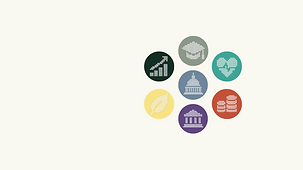
Economic opportunity
Education
Health care
Fiscal responsibility
Energy
Taxation
Congressional Reform
The reforms work as one package, not as a menu of separate fights.
Our 2025-2026 research with pollster YouGov asked Americans about each policy area, then whether they would choose the full Grand Bargain package or the alternative presented.
In four YouGov surveys fielded between May and July of 2025 (of approximately 4,000 U.S. adults), roughly a third of respondents disliked most of the proposals in at least one policy area. Even so, most of them (58%) chose the Grand Bargain package over the alternative presented.
Social and cultural issues were deliberately left out of the grand bargain. While important, they are often tied to identity and moral conviction, and people rarely trade on those. Focusing on economic and governing questions keeps the bargain on ground where trades are possible. It also leaves room to build trust that could help with harder questions later.
The work ahead follows science. First, show where Americans already agree. Next, test whether that agreement holds when people face real costs. Then bring citizens and experts together to convert shared priorities into an agenda that Congress can actually debate, modify and pass.
The choice in front of us
Americans are often told they are too divided to agree on anything. The research says something more hopeful. People disagree about individual policies. Many of them can still agree on a fair package, when the choices are clear and the trade-offs are honest.
Get involved: Check out the LAUNCHPAD for yourself. Host a conversation in your community, and tell your representatives that you would trade for a better future.
The pie is not fixed. The question is whether we're willing to bake a bigger one together.
Sources
Bazerman, M. H., Curhan, J. R., Moore, D. A., & Valley, K. L. (2000). Negotiation. Annual Review of Psychology, 51, 279–314. https://doi.org/10.1146/annurev.psych.51.1.279
Brehm, J. W. (1966). A theory of psychological reactance. Academic Press.
Fisher, R., & Ury, W. (1981). Getting to yes: Negotiating agreement without giving in. Houghton Mifflin.
Hainmueller, J., Hopkins, D. J., & Yamamoto, T. (2014). Causal inference in conjoint analysis: Understanding multidimensional choices via stated preference experiments. Political Analysis, 22(1), 1–30. https://doi.org/10.1093/pan/mpt024
Kahneman, D., & Tversky, A. (1979). Prospect theory: An analysis of decision under risk. Econometrica, 47(2), 263–291. https://doi.org/10.2307/1914185
OECD. (2020). Innovative citizen participation and new democratic institutions: Catching the deliberative wave. OECD Publishing. https://doi.org/10.1787/339306da-en
Ross, L., & Stillinger, C. (1991). Barriers to conflict resolution. Negotiation Journal, 7(4), 389–404. https://doi.org/10.1007/BF01000332
Ryan, R. M., & Deci, E. L. (2000). Self-determination theory and the facilitation of intrinsic motivation, social development, and well-being. American Psychologist, 55(1), 68–78. https://doi.org/10.1037/0003-066X.55.1.68
Santoro, E., & Broockman, D. E. (2022). The promise and pitfalls of cross-partisan conversations for reducing affective polarization: Evidence from randomized experiments. Science Advances, 8(25), eabn5515. https://doi.org/10.1126/sciadv.abn5515
Shields, G. S., Sazma, M. A., & Yonelinas, A. P. (2016). The effects of acute stress on core executive functions: A meta-analysis and comparison with cortisol. Neuroscience & Biobehavioral Reviews, 68, 651–668. https://doi.org/10.1016/j.neubiorev.2016.06.038
Tetlock, P. E. (2003). Thinking the unthinkable: Sacred values and taboo cognitions. Trends in Cognitive Sciences, 7(7), 320–324. https://pubmed.ncbi.nlm.nih.gov/12860191/
Thompson, L., & Hrebec, D. (1996). Lose-lose agreements in interdependent decision making. Psychological Bulletin, 120(3), 396–409. https://doi.org/10.1037/0033-2909.120.3.396
Voelkel, J. G., et al. (2024). Megastudy testing 25 treatments to reduce antidemocratic attitudes and partisan animosity. Science, 386(6719), eadh4764. https://doi.org/10.1126/science.adh4764
Other Articles